Every discipline, however rigorous, operates within an order it did not create. Physics assumes the constancy of nature; mathematics assumes the coherence of number; language assumes the possibility of meaning. Yet none of these can justify the ground on which they stand. They measure patterns within reality but cannot account for why reality is ordered at all.
Every act of signification—whether through language, number, or symbol—presupposes a universal referent, a reality beyond itself that secures the meaning of its forms. Even at the level of the grapheme and the phoneme—the written and spoken elements of meaning—intelligibility depends on correspondence with a prior order that neither sound nor symbol can self-generate. No closed system can ground the truth of its own intelligibility; to signify universally is to depend upon what transcends all particular signs. Thus, the very universality of meaning becomes the most compelling witness to a First Cause: the living Source from which all reference, order, and interpretation derive. All intelligibility therefore bears the imprint of participation in a reality not of its own making.
This unchosen intelligibility—the prior grammar of existence—is what the Submetaphysics framework calls the First Order: the ontological reality that precedes every method and sustains every truth-claim. The First Order is the visible structure of coherence; the First Cause is the living Source that gives that structure being. To encounter the First Order is therefore to stand at the threshold of the First Cause, where comprehension yields to reverence and knowledge returns to its Source.
Submetaphysics rests upon four irreducible pillars: Reality, Duality, Morality, and Personality (see prologue and presuppositions) . Reality is the given ground of being—what is because it has been spoken into existence. Duality introduces freedom—the relational divide between Creator and creation, truth and will. Morality orders that freedom through alignment with the Author’s nature, defining the boundaries of faithful participation. Personality (defined metaphysically as ability to reason to a definite conclusion and have purpose) crowns the structure: truth becomes encounter, and being finds meaning in relationship.
The Word and the Number gathers these pillars into a single act. Mathematics reveals incorruptible order; language reveals moral agency. Together they disclose the ultimate synthesis—that all truth, whether numerical or verbal, derives from the same living Source. Here the circle closes: ontology becomes worship, and reason returns to relationship.
For a full discussion of the significance of a universal referent, see Appendix 02.
Every act of creation bears the imprint of two divine rights: the right to give being, and the right to make being manifest. These together form what the Submetaphysics framework calls the Divine Double Prerogative—the auctoritas essendi and the auctoritas instantiandi. (See also Appendix SP ). The first is the prerogative of being—the exclusive capacity to bring existence out of nothing, to say “Let there be.” The second is the prerogative of manifestation—the authority to give that being form, intelligibility, and participation within a communicable order. See Ontology Part I for a detailed discussion and figures 1 & 2 below.
All created reality unfolds within the limits of these two permissions. Existence does not arise by spontaneous potential but by ontological invitation; and meaning does not emerge from system or symbol alone, but by the lawful participation of finite will in divine expression. The creature is therefore not an independent node of agency but a moral interpreter—empowered to signify but not to originate, to instantiate but not to author. The boundary of creation is not physical but relational: it lies in the distinction between expression that proceeds from communion and expression that usurps it.
The two prerogatives together define the grammar of creation. Being grounds order; manifestation establishes communication. Through them, truth acquires both existence and address. Without the first, nothing would be; without the second, nothing could be known. Every field of knowledge—whether scientific, mathematical, or linguistic—implicitly borrows these divine licenses. To reason, to speak, or to calculate is to operate within permissions that precede the thinker, the speaker, and the system.
The Divine Double Prerogative is not only metaphysical; it is communicative. Creation itself is a speech-act, and the same duality that governs being and manifestation reappears in every act of signification. The phoneme and the grapheme—sound and sign, voice and trace—form the semiotic reflection of the two divine rights.
The phoneme mirrors the auctoritas essendi: it is dynamic, living, and creative. In every utterance there is a microcosm of “Let there be”—sound as the first impulse of existence, meaning in motion.The grapheme mirrors the auctoritas instantiandi: it is stabilised, enduring, visible. It fixes the transient into form and makes meaning transmissible across time.Together they enact the same relational mystery that lies at the heart of creation: the living Word made manifest, the invisible given permanence.
Every act of language—spoken or written—therefore re-enacts this divine architecture. To speak truth is to align sound with being; to write truth is to instantiate that alignment into durable relation.Falsehood, by contrast, is not mere error but pseudo-instantiation: a simulation of authority that imitates the divine act without divine sanction. It seeks manifestation without rightful authorship—form without communion. Thus, moral disorder in communication is not an aesthetic flaw but a metaphysical rebellion against the double prerogative itself.
In this light, even the smallest unit of expression becomes a moral frontier. The phoneme and grapheme are not neutral vessels but ontological emissaries—created capacities through which relation occurs. They bridge the unseen will of the speaker with the shared intelligibility of the world, and in doing so, they testify that meaning is never self-contained. Every word, every symbol, every sign draws upon a Source beyond itself for coherence.
Phonemes, graphemes, and morphemes thus serve not merely as instruments of expression but as the very vehicles of comprehension and signification. Through them, consciousness engages reality; through them, the unseen becomes intelligible. They are the structured permissions by which finite minds participate in infinite meaning. Each is a medium of relational access—sound as presence, sign as form, and morpheme as covenant—together forming the architecture through which truth crosses the boundary from being into understanding.
Beyond their internal function, these same forms constitute the universal medium of reference among persons. They exist externally and stably enough to make mutual comprehension possible, carrying meaning across the boundaries of individual consciousness. Thus, even at the human level, the instruments of language are not subjective constructs but shared structures—creaturely analogues of divine communication through which minds can converge upon a common truth. Universality, in this sense, is not abstraction but participation in the same intelligible order that first gave speech its coherence.
Yet universality is not only external but imprinted. Beneath the shared structures of language lie shared intuitions of value—truth, justice, goodness—that precede all articulation. These are not abstract inventions of culture but typophoric realities: divine imprints upon consciousness that make recognition possible before expression. Even without words, the soul knows fairness and recoils from deceit; even infants discern the moral proportion of action and intent. Such universals do not depend on syntax or symbol but testify to an inward participation in the same order that governs speech. The Word that shaped the world also shaped perception, inscribing in every mind the faint grammar of divine likeness.
If the internal referent reveals that meaning is already inscribed within the soul, typophoric reflection clarifies how this inward recognition corresponds to the outward act of reference.The same double movement—revelation and recognition, speaking and hearing—governs both the cosmos and communication.
This inward recognition corresponds to what we earlier identified in the Pragmatics section as typophoric reference or conceptual deixis—the gesture toward ontological kinds such as justice or truth, which here becomes the internal mirror of meaning rather than its external sign. See Pragmatics.
This divine architecture of communication—being and manifestation, sound and sign—extends through all domains of intelligibility. From it flow the broader genealogies of number, word, and harmony: mathematics as the form of order, language as the form of relation, and music as the form of moral proportion. Each is a distinct expression of the same primal act of communication. What the Double Divine Prerogative establishes in principle, the genealogical unfolding now displays in motion—the descent of intelligibility from divine utterance into created participation.
Every act of communication mirrors the divine architecture of being. The phoneme and the grapheme reveal that meaning is not invented but participated in—sound and sign are not neutral vessels but extensions of divine authorship. Yet their union in the morpheme unveils a deeper principle: relation itself is communicative, and communication itself is moral.
Music, in this view, is not an independent domain but a heightened instance (instantiation) of sound’s moral and aesthetic potential. Whether the vibration proceeds from the human voice or an instrument, it remains the same ontological act—the moral ordering of sound into form, the audible echo of the Word’s first command, “Let there be.”
Communication is not merely the instrument of relation; it is its very form
Creation does not simply contain speech—it is speech sustained in relation. To exist is to be addressed, and to know is to answer. The human person therefore stands not as an isolated consciousness but as a responsive node in a living dialogue: creature to Creator, soul to soul, will to truth.
Communication is moral because it presupposes freedom
Every exchange between persons contains the liberty to align or to deviate, to affirm or to distort, to participate or to rebel. This liberty is not accidental—it is the necessary condition of relational integrity. Without the possibility of deviation, there could be sound but no speech, structure but no meaning, contact but no communion. The moral horizon of communication arises precisely because the will is free to either harmonise with or fracture the divine dialogue of being.
At this point the structure of intelligibility unfolds into a continuum. The phoneme expresses being in motion—the utterance of existence; the grapheme fixes being in form—the embodiment of presence; the morpheme binds being in meaning—the covenant of relation. When these dimensions ascend into proportion and resonance, music emerges as their aesthetic consummation: the harmony of freedom with order, emotion with truth.
But this continuum is not automatic; it is volitional. Each medium of communication becomes a site of moral choice—a threshold where the anthropic agent either participates faithfully in divine expression or simulates it in rebellion. To speak truthfully is to align with the auctoritas essendi; to instantiate justly is to honour the auctoritas instantiandi. To distort either is to counterfeit creation itself: sound without spirit, form without fidelity.
Thus, communication re-enacts the Double Divine Prerogative not as a mechanical repetition but as a moral encounter. It invites creaturely participation (anthropic participation, see figure 2 below) in the creative act—an invitation that can be received or refused. The fidelity of language, the precision of mathematics, and the harmony of music all stand or fall on this same axis of communion.
From sign to sense, from structure to song, every medium of expression participates in the same ontological act. Whether syllable, symbol, or symphony, each becomes a moral instrument: a means through which creation either resonates with or resists its Author. The moral quality of communication, therefore, lies not in its efficiency or beauty, but in its fidelity to the Source it echoes.
This continuum reveals that all intelligibility is relational and all relation volitional. There is no closed circuit of meaning, no language self-sufficient unto itself. Every utterance, every equation, every melody bears the imprint of communion. To speak, to write, to compose is to participate in the ongoing dialogue of creation—the ceaseless exchange between the living Word and the world that answers Him.
Yet universality is not confined to the realm of sound or symbol. The same architecture of relation is imprinted within the perceiver. Beneath the structures of language and number lie shared intuitions of truth, justice, and proportion—typophoric universals that pre-exist articulation. Even before learning to speak, the human soul recognises fairness, coherence, and dissonance; it senses alignment and transgression. Such recognitions are not derived from culture but from creation itself. They reveal that communication is possible only because communion is antecedent: the moral grammar of being already speaks within us.
We begin with the boundary: order presumes freedom. Mathematics discloses pure truth—truth that simply is, given certain axioms. Language discloses relational truth—truth that becomes morally binding through encounter. And wherever structure and will meet, harmony follows: the resonance of order expressed through relation.T his is not another kind of truth, but a reminder that all truth, when rightly held, coheres.
The decisive difference is agency—the exercise of will in relation to truth. An arithmetical proof proceeds without permission; a sentence requires consent. To speak is to enter covenant with reality: the freedom to affirm or betray what is. Agency introduces moral temperature into knowledge—it makes truth answerable to character.
Thus mathematics represents necessity; language represents freedom;and harmony, when it occurs, represents fidelity—freedom fulfilling form. What Hilbert sought through system and Gödel revealed through limitation, the Word completes through relation: closure finds coherence only in communion. Reality’s fullness requires participation; reason alone cannot inhabit what it describes.
Key Terms
Agency: Intention-bearing action of persons; will expressed in speech or its withholding.
Pure truth: Truth independent of agent intention (e.g., a mathematical entailment once axioms are fixed).
Relational truth: Truth disclosed through encounter and response; depends on the moral posture of agents.
Liberty vs. License: Freedom aligned with reality versus freedom detached from it.
Pseudo-instantiation / Effigiation / Typophoric distortion: Later sections name distinct ways agency can misrepresent truth.
This moral architecture of agency unfolds historically as a genealogy of intelligible orders—a descent of divine communication into mathematical form, linguistic relation, and harmonic proportion.
Mathematics discloses pure truth—truth that simply is, given certain axioms. Language discloses relational truth—truth that becomes morally binding through encounter. And wherever structure and will meet, harmony follows: the resonance of order expressed through relation. It is not another kind of truth, but the audible witness that structure and meaning were never opposed.
Beneath these modes lies a single genealogy: every act of expression descends from the same primordial utterance. Even the smallest units of meaning—the phoneme and the grapheme—bear its imprint: sound and sign joined in testimony to the order that makes communication possible. The Word that called being into order became the matrix of all intelligibility, and from it flow the structures of number, language, and tone. Each is a refracted form of that first communication—mathematics bearing its constancy, language its relational depth, and harmony its resonant joy. To speak, to calculate, or to compose is therefore to echo, however faintly, the grammar of creation itself.
The decisive difference is agency—the exercise of will in relation to truth.An arithmetical proof proceeds without permission; a sentence requires consent. To speak is to enter covenant with reality: the freedom to affirm or betray what is. Agency introduces moral temperature into knowledge—it makes truth answerable to character.
Hence, mathematics represents necessity; language represents freedom; and harmony, when it occurs, represents fidelity—freedom fulfilling form. What Hilbert sought through system and Gödel revealed through limitation, the Word completes through relation: closure finds its coherence only in communion. Reality’s fullness requires participation; reason alone cannot inhabit what it describes.
In mathematics, relations are fixed by proof. Symbols have no motive; a false equation is invalid, not sinful. Closure ensures invariance: if the axiom holds, the result follows. This is the realm of what must be—the silent architecture of divine logic.
In language, intention depends on invocation and context. Words point beyond themselves, shaped by will and desire. Openness allows novelty, persuasion, and covenant; it also allows distortion. This is the realm of what may be—the living theatre of moral choice.
Between these domains lies a moral gradient: mathematics → logic → language → relation → worship. Agency ascends through awareness:closure guards structure, openness tests fidelity, coherence binds the two in purpose. The One True God sustains all as Author and Interpreter—the ground of necessity, the guardian of freedom, the harmony that holds them both.
Every act of communication declares a posture. To speak is to place one’s will in relation to truth; to withhold speech is to defer that relation. Thus, the grammar of agency is a moral grammar.
Liberty is agency aligned with ontological truth—freedom exercised within created order for the sake of communion. License is agency detached from order—freedom exercised as self-definition, indifferent to the real.
Even music, in its disciplined harmony, illustrates this moral architecture. Harmony is liberty disciplined by proportion; dissonance is license without resolution. Yet this is analogy, not ontology: just as melody gains beauty by obeying law,so the human will gains dignity by remaining in truth. Form and freedom are not enemies; each becomes complete only in the other.

Liberty is not rigidity; it is the freedom of alignment, like a compass kept true to the pole.License is the illusion of freedom once alignment is refused—a compass spinning in its own field. When agency loses alignment, it begins to simulate the authority it has severed, generating a moral counterfeit.
Language then becomes rhetoric, mathematics becomes relativism, and expression becomes noise in place of meaning. In each case, beauty gives way to spectacle; coherence gives way to coercion.
True freedom, like true harmony, is not the absence of law but its joyful fulfilment.
Openness, though necessary for love and creativity, carries inherent risk. When agency loses alignment, it begins to simulate the authority it has severed—projecting autonomy as artifice. Every corruption of language, number, or any human art traces back to one of three moral failures of agency. These are the same pathologies Gödel revealed in logic by negation: when a system closes upon itself, it can no longer explain its own coherence.
The first is pseudo-instantiation—the act of assuming creative or moral legitimacy without divine warrant. The word as if replaces as is; the claim of authorship replaces participation. Speech no longer bears witness, proof no longer serves truth. As in music, imitation may mimic resolution yet lack substance—the echo of freedom without proportion.
The second is effigiation, the crafting of likeness that mimics presence but lacks being. Symbols appear luminous but hollow, detached from their ontic reality. Whether in image, argument, or sound, form is worshipped instead of the reality it was meant to reveal. Transparency becomes parody; order becomes ornament.
The third is typophoric distortion, the bending of inherited patterns that once gestured toward divine archetypes. It is the semiotic form of idolatry—meaning redefined without communion. Patterns remain, but their referents are replaced; “freedom” becomes “license,” “justice” becomes “outcome.” At its worst, distortion produces what Isaiah called the Overton Whirl : the progressive normalization of license under the rhetoric of tolerance. When truth loses reference to reality, permissiveness becomes ontology, and discourse that once testified to order becomes spectacle that obscures it.
The mechanism is always the same: cultural effigiation amplified by incentive and repetition, which calcifies emotion until license masquerades as liberty. In the epistemic register, this is the collapse of reference; in the moral register, the collapse of proportion. Both are forms of ontological drift. Hence the moral weight of every system—logical, linguistic, or aesthetic—is either restoration or counterfeit. Language does not drift innocently; nor does reason, nor art. All error begins as severed relation and ends as simulated truth.
Linguistic Fault Lines
The corruption of agency often begins at the lexical level, where precision first yields to persuasion.
Homonymic Conflation: distinct ontological types share a single signifier, simulating coherence. Examples: “freedom” used for both liberty and license; “faith” used for trust and credulity.
Syncretic Conflation: incompatible meanings fused to conceal contradiction. Examples: “tolerance” blending patience with moral neutrality; “progress” merging technological expansion with ethical advance. These are linguistic equivalents of pseudo-instantiation—semantic rebellions that disguise disjunction as unity.
A rigorous claim must be tested where it can most easily break. Four principal objections confront the thesis that mathematics is agent-free while language is agent-laden.
Gödel proved that any sufficiently expressive formal system contains true statements unprovable within it. Some infer that mathematics is therefore “open. ”Yet incompleteness reveals proof-limits, not intention. Unprovable truths do not choose to elude proof; the system simply lacks internal reach. Its silence is structural, not volitional. Closure remains intact at the level of will: no equation ever deceives. But language and music can deceive, because both are bound to personality. Their intelligibility depends upon moral agency—the intention of a speaker, the integrity of a composer. Gödel showed that formal systems fail not for lack of logic, but for want of life. Truth requires a living referent; the closed becomes complete only through communion.
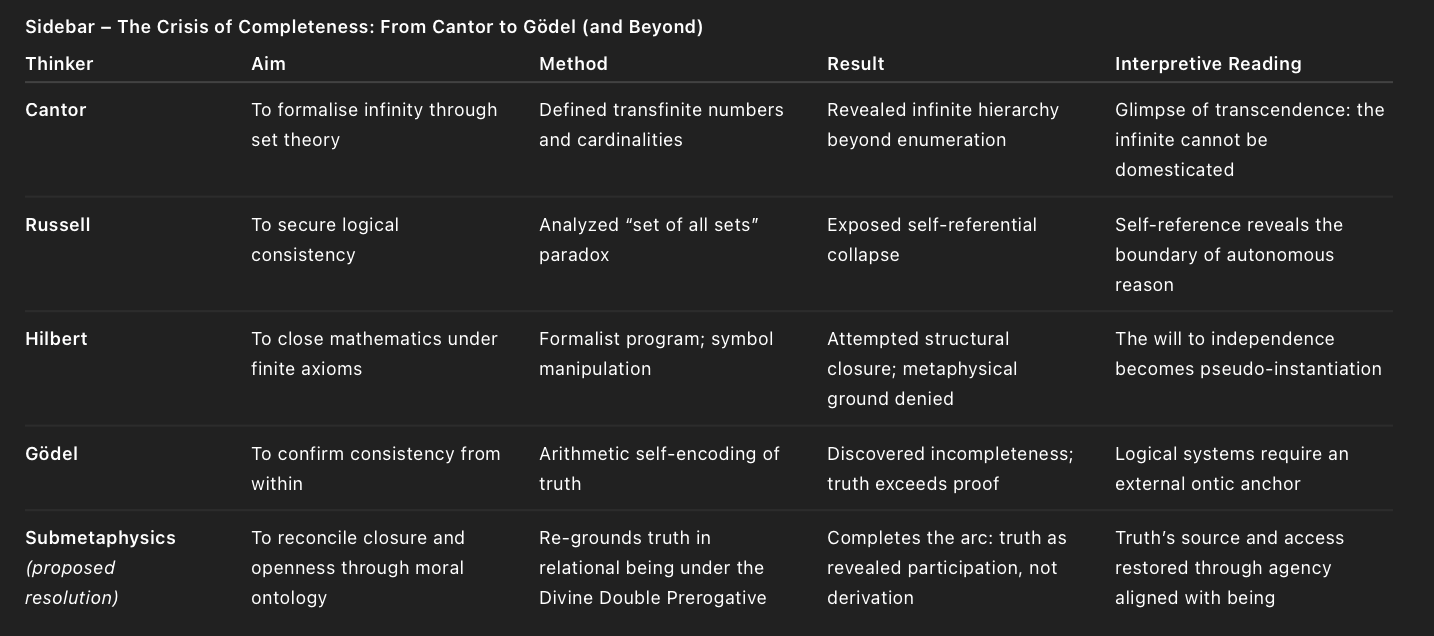
Hilbert sought a system that could justify itself and missed the necessity of relation; Gödel built a system so perfect it confessed its own insufficiency. Both revealed, in opposite ways, that meaning cannot arise from structure alone. The Submetaphysical framework simply names the missing term—Personality—as the ontological condition of all intelligibility.
Programming languages, contracts, and statutes often behave like mathematics—deterministic and rule-bound. But that closure is engineered. Agents still choose axioms, write syntax, interpret exceptions, and enforce results. Every closed language exists within an open world sustained by will; each rule owes its birth to agency even if its operation does not.
Wittgenstein and Quine describe both as human rule-following activities. True—but within the practice, agency localises differently. In mathematics, intention ceases once axioms are fixed; in language, it must be continually renewed. The distinction lies not in convention but in the location of will.
Minimalists claim “ ‘Snow is white’ is true iff snow is white ” needs no ontology. Even so, the disquotation only functions if “snow” and “white” still refer—that is, if statements answer to a world not set by will. Our claim is modest: truth requires ontic accountability, whether one calls it revelation or reality.
If openness invites error, must society suppress it? No. Patience and error-tolerance are not the same. Civic tolerance allows time for alignment; it does not canonise falsehood. To forbid coercion is not to suspend truth. When a culture confuses patience with permission, it mistakes indifference for love.
Music, it is argued, conveys no explicit doctrine and therefore lies outside truth-claims. Yet this is precisely what makes it revelatory. It conveys form as feeling—truth embodied as proportion. Music communicates through coherence, not convention; through relation, not assertion. Its moral dimension lies not in message but in fidelity to structure: harmony as truthful relation, dissonance as moral tension. Thus, music too participates in the economy of truth: it is propositional through proportion.
If openness exposes risk, it also contains redemption.The remedy for license is not closure but re-anchoring—freedom restored to fidelity.Thus, the biblical narrative is itself the grammar of that restoration.
In Christ, truth speaks bodily and rationally within freedom’s envelope.
“In the beginning was the Word, and the Word was with God, and the Word was God… All things were made by him” (John 1:1–3).
“The Word became flesh and dwelt among us, full of grace and truth” (John 1:14).
Here the immutable enters the mutable without corruption.The eternal Logos, by whom structure exists, takes on the openness of human agency to redeem it.Fidelity becomes relational: revelation resolves the dissonance of form and freedom.
The Spirit sustains alignment—beauty functioning within fidelity.
“Where the Spirit of truth is, there is liberty” (2 Cor 3:17).
The Spirit mediates relational coherence:
In the soul, as conscience awakened.
In the community, as covenant renewed.
In language, as clarity and confession.
In song, as harmony and hope.
The Spirit brings tuning without tyranny—keeping freedom anchored to truth.Through Him, all creation resonates again in key.
Christian morality is not merely moral law but structural proportion.Mathematics depicts it in circle—order without will.Language opens the arc—freedom within will.Music completes it—resolution through will’s return to harmony.
Obedience does not erase curvature; it grants orientation.Revelation does not abolish agency; it tunes it.Freedom and fidelity meet in resonance.
“I will sing of mercy and judgment: unto thee, O Lord, will I sing” (Ps 101:1).
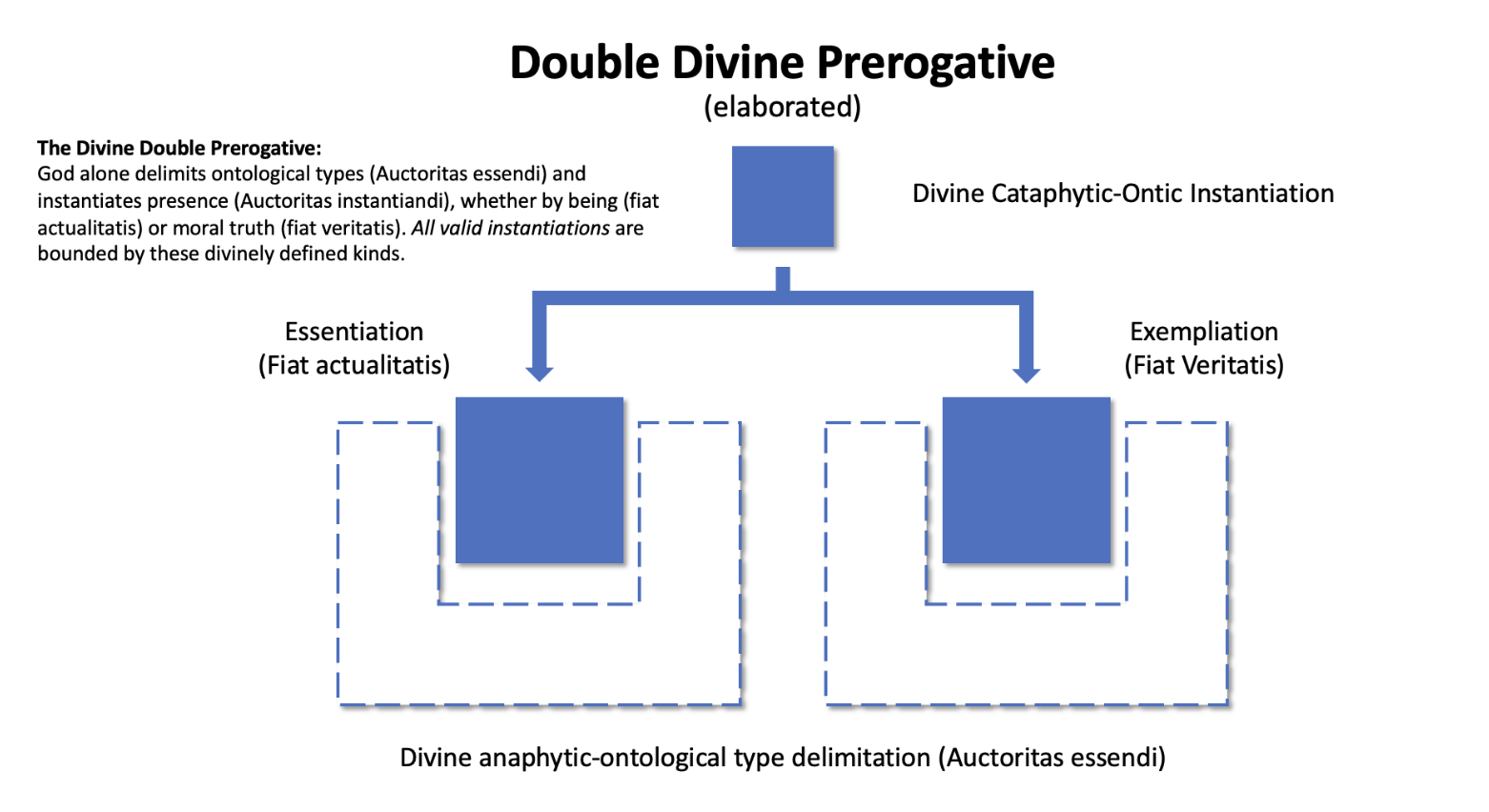
Figure 1 — The Double Divine Prerogative (elaborated)
God alone delimits ontological types (Auctoritas essendi) and instantiates presence (Auctoritas instantiandi), whether by being (fiat actualitatis) or by moral truth (fiat veritatis). Essentiation corresponds to divine being (the ontic act of actuality). Exempliation corresponds to divine truth (the moral act of revelation). All valid creaturely instantiations occur within these divinely defined kinds. The dashed boundaries represent the anaphytic limit—the fixed ontological perimeter beyond which pseudo-instantiation and effigiation arise. Christ’s incarnation is the perfect exempliation within the permissive structure of Auctoritas essendi and Auctoritas instantiandi—the bridge by which human agency re-enters lawful participation.
The same architecture that defines divine prerogative also frames the human invitation to participate within bounded agency.
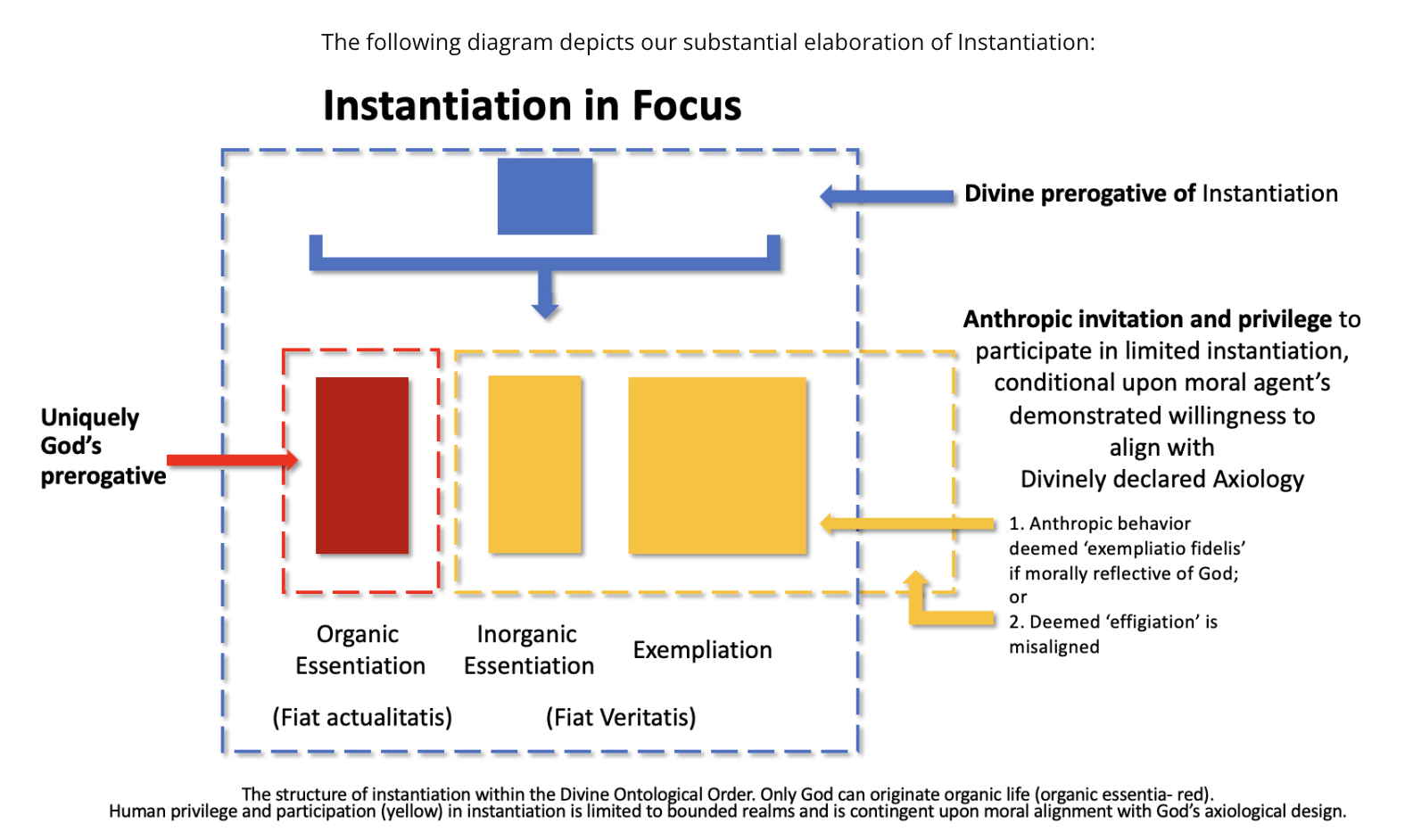
Figure 2 — Anthropic Participation in Divine Instantiation
Humanity is invited into bounded co-agency under divine axiological order. The red field represents what God alone can originate (organic life, essence itself). The yellow field represents the moral domain of conditional exemplification—acts and meanings that participate in truth only through fidelity. Within this field, agency becomes either exempliatio fidelis (faithful participation) or effigiation (simulated autonomy). The boundary signifies not limitation but covenantal mercy: freedom contained by grace.
Both above diagrams are fully discussed in Ontology Part 1 .
The moral recovery of language requires eternal alignment. Open systems need guardians that preserve freedom while preventing drift. Such guardians are found in relational structures—principles that compel visible enactment in behaviour, intention, and sound. Ethics, therefore, is not only duty but continuity through tone.To speak or to sing truthfully is to mirror the harmony of the Spirit.
Each word, act, or note must answer to proportion: fidelity tested in practice. Mathematics yields structural proof; language yields testimonial proof; song yields experiential proof. Where speech testifies, melody reinforces; both together transform. Hence truth becomes both audible and credible: coherence becomes resonance.
In this redemptive architecture, no medium is mute.Every utterance—whether theorem, statement, or melody—becomes a confession of posture. Thus, truth is verified through concord, not through coercion.Harmony is the lived geometry of redemption.
Each domain of Submetaphysics now finds its fulfilment in agency rightly ordered.
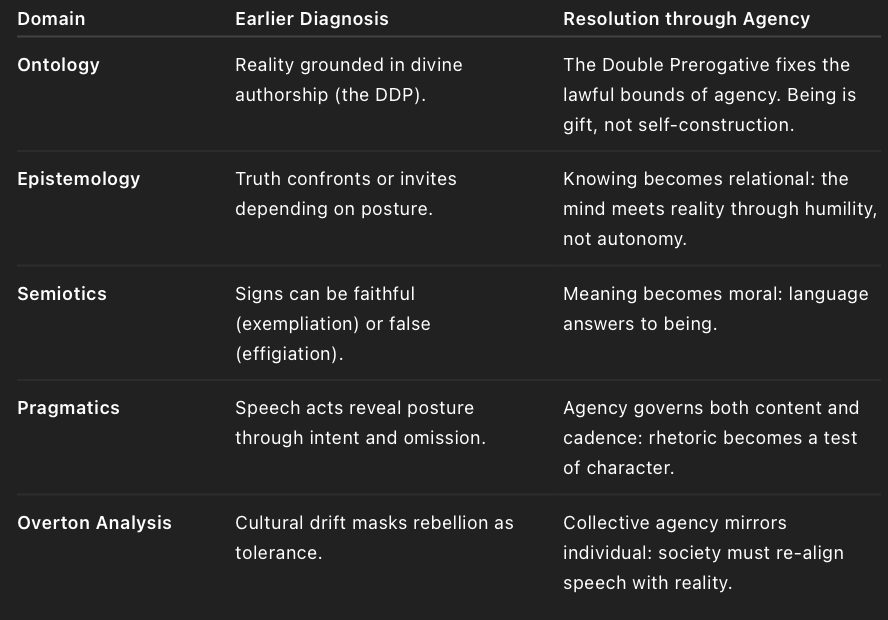
Agency thus becomes the interpretive key to the entire framework:
Ontology defines its origin;
Epistemology tests its humility;
Semiotics displays its fidelity;
Pragmatics exposes its motive;
Culture manifests its aggregate direction.
The closed and open systems, once opposed, are reconciled through agency rightly ordered.Necessity remains immutable; freedom becomes trustworthy. The sculptor’s hand has reached the heart of the stone.
The story that began in silence ends in speech. Hilbert sought to perfect form; Gödel uncovered its wound. Both showed that structure alone cannot mean. Only a person can intend, and only relation can complete what reason begins. Personality, not procedure, is the ground of intelligibility: coherence exists because communion exists. The universal longing for meaning—shared by every language, every equation, every act of creation—already presupposes a universal referent. If truth is to be true for all minds, it must originate in a Mind beyond them all.
Number stands for the world as God conceived it—ordered, intelligible, unerring. Word stands for the world as God shared it—living, relational, redeemable. One discloses structure; the other reveals love. Between them moves the human agent, whose task is not invention but participation. The coherence of number and the expressiveness of speech are not parallel miracles but twin reflections of one Source. They reveal that all intelligibility—mathematical, linguistic, or moral—flows from a living unity that sustains its own universality.
Number cannot lie because it cannot will. Word can love because it can will—and therefore can also lie. Truth unites them: precision in the service of communion. Agency is the measure of moral being. Freedom without fidelity collapses into noise; obedience without freedom ossifies into mechanism. Their reconciliation is not compromise but sanctification—the will aligned with the real, the open bound joyfully to the true.
Creation began with the Word; it endures through fidelity to the Number; it is completed when agency itself becomes worship. Then pure truth and relational truth, necessity and freedom, law and love stand together—not as rivals, but as the two hands of God shaping one creation. Universality is not abstraction but personality extended to its furthest reach. The constancy of truth across all minds testifies to the constancy of the Mind from which it comes. What Hilbert sought to formalise and Gödel exposed as incomplete is fulfilled in the living Referent Himself: the Source whose being makes meaning possible, and whose communion makes creation intelligible.
And yet this universality is not only transcendent but also immanent. The grammar of truth is written not merely in the heavens but within the heart. Every mind, even before speech, bears the imprint of divine proportion—the intuitive sense of fairness, harmony, and coherence that precedes expression. To know is to remember that we are known; to perceive order is already to participate in it. Thus, the universal referent is not a remote law but a living resonance, a moral signature within consciousness itself, calling reason back to its Source.
If number discloses truth and word reveals will, music discloses alignment. It is the living grammar of proportion, where freedom becomes form and emotion consents to law. Harmony is not an aesthetic accident but a moral analogue: it arises when independence yields to coherence without losing distinction. Dissonance, in turn, mirrors rebellion—resolve withheld until relation is restored. Thus, even the unseen mathematics of tone bears witness to the same moral order that governs speech and reason. In beauty, truth and goodness converge; and when music moves the soul toward peace, it merely re-enacts the oldest metaphysical law: that all creation is meant to sound in tune with its Author.
At the summit of Submetaphysics, the four pillars—Reality, Duality, Morality, and Personality—stand reconciled.
Reality is no longer brute existence but revealed order; duality, no longer tension but invitation; morality, no longer restraint but harmony; and Personality, no longer abstraction but communion.
In The Word and the Number, mathematics and language meet as symbols of this unity: one expresses the fidelity of creation’s structure, the other the freedom of moral will. Their convergence reveals that every equation and every utterance participates in the same covenantal logic:truth originates in Personhood. Thus the framework ends where all philosophy must—at worship. Reason bows, not in defeat, but in recognition that the Source of all coherence is living, relational, and good.
*Footnotes
The Gödelian Reversal: Truth > Logic
Imagine you build a perfect machine made of symbols. It follows rules so precisely that, if you feed it any valid mathematical question, it will churn until it finds the correct answer. Hilbert thought such a machine could exist—that mathematics could prove all truths about itself simply by following its own rules.
Gödel showed this dream was impossible. He constructed a special kind of mathematical sentence that says, in effect, “This statement cannot be proved by this system. ”The system cannot ignore the sentence, because it is written in the system’s own language; yet it cannot prove it, because proving it would make it false. The system has no safe way to talk about itself without stepping outside its own boundaries.
In simpler terms: no set of rules can explain why the rules themselves make sense. Every logical world needs a world beyond it—a place from which its meaning comes.Hilbert tried to build a universe of reason with no outside reference, but Gödel proved that such closure always breaks. There will always be truths that the system recognises but cannot justify—like a book that can be read only by someone not inside its pages.
That is why Gödel matters: he discovered, mathematically, what philosophers and theologians had long suspected—truth is larger than logic. And in The Word and the Number, that is where relational ontology enters: what Hilbert called the failure of formalism is, in fact, the mark of divine authorship—a reminder that language and number alike depend on an Author who stands beyond them.
In metaphysical summary: logic does not produce truth; it reflects it. Truth > Logic.
The Paradox of Relativism — Gödel’s Mirror
Relativism fails for the same reason Hilbert’s formalism failed: both deny an external ground for truth. The relativist says, “There are no absolutes,” and refutes himself. Hilbert built a system that tried to prove itself and found it could not. Both show that meaning cannot sustain itself without an anchor beyond itself.
In logic, Gödel called it incompleteness.
In morality, we call it contradiction.
In ontology, it is rebellion against the Author of truth.
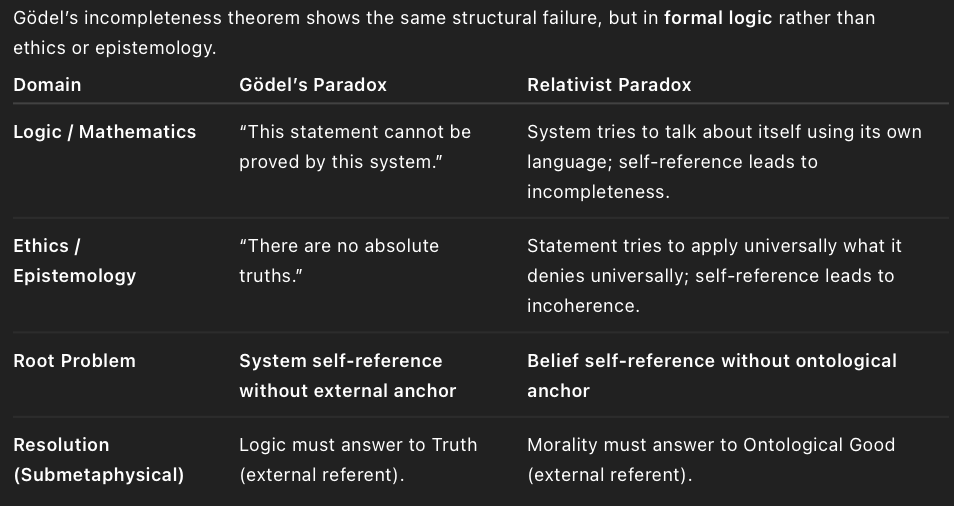
Meaning cannot be self-contained.